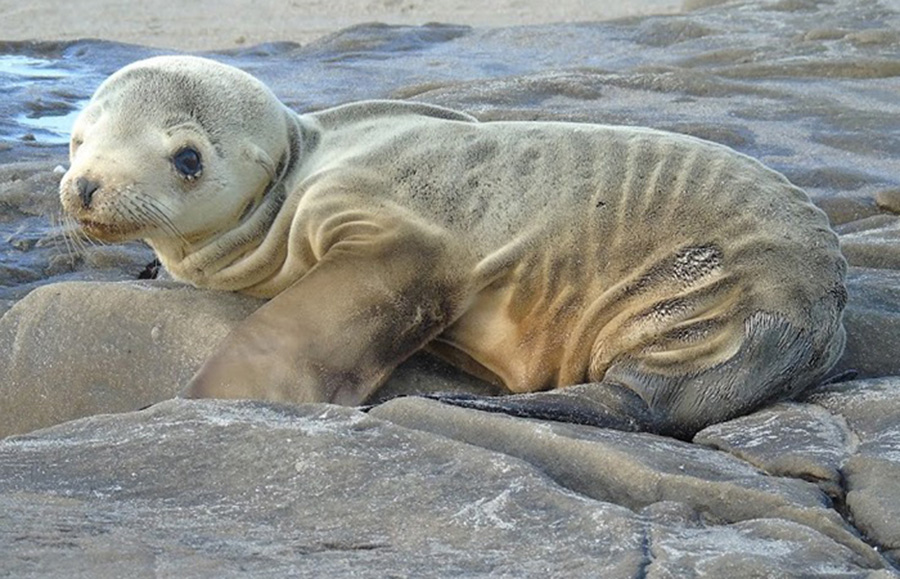
More than 100 California sea lions have been sickened by domoic acid poisoning along Monterey Bay this year, with animals washing ashore disoriented and seizing.
The Marine Mammal Center, which operates a field triage office in Castroville, has treated the animals since a surge that began in July, according to KQED. In a typical year, the center sees 75 to 90 cases across its entire 600-mile California response area.
Marine Mammal Center spokesperson Giancarlo Rulli told Monterey County NOW the center's hotline is fielding 300 to 600 calls a day. Reports have concentrated at Del Monte Beach, Seaside and Pajaro Dunes State Beach.
"Outbreaks trend more intense and more unpredictable," Rulli told Monterey County NOW.
Domoic acid is a neurotoxin produced by blooms of the algae Pseudo-nitzschia. The California Department of Fish and Wildlife (CDFW) issued a health advisory on June 26 after finding elevated levels in anchovy and sardine sampled from Monterey Bay. CDFW Director Meghan Hertel enacted a commercial take restriction on those species for human consumption, covering Monterey Bay waters south of Pigeon Point to Point Lobos. Whether that restriction remains in effect is unclear.
The toxin poses risks to people, too. At low levels, domoic acid can cause nausea, diarrhea and dizziness, according to CDFW. At higher levels, it can cause persistent short-term memory loss, seizures and can be fatal.
Most of the affected sea lions are subadults and adults weighing 125 to more than 300 pounds. Rescuing one requires four to six volunteers hauling a 100-pound metal carrier to the stranding site, according to the Santa Cruz Sentinel. Animals receive anti-seizure medication at the Castroville office before being transported to the center's main hospital in Sausalito.
The center has about 100 active volunteers in the Castroville area but cannot respond to every call. Rulli told KQED the center is seeing animals die on beaches and in transport. The center is recruiting additional volunteers.
Rulli told The Californian on Sept. 4 there is no clear indicator of how long the outbreak may last. The center first documented domoic acid poisoning in California sea lions in 1998, and Rulli said the toxin has grown less seasonal and less predictable since then.
Beachgoers who spot a distressed sea lion should stay at least 150 feet away, keep dogs leashed and call the Marine Mammal Center's hotline at 415-289-7325. CDFW's Domoic Acid Fishery Information Line is (831) 649-2883.