Flock Safety's license-plate reader cameras remain active across Monterey, Pacific Grove, Carmel-by-the-Sea and Seaside, even as the county moves to tear down 63 of the devices in unincorporated areas.
The Monterey County Board of Supervisors voted 3-2 on Sept. 22 to reject a contract with Flock Safety and ordered the Sheriff's Office to remove its cameras within 60 days. But that decision covers only the Sheriff's Office. Police departments in at least six cities, including all four Peninsula municipalities, operate Flock cameras under their own contracts, Voices of Monterey Bay reported Thursday, Oct. 8.
Now the coalition is going city by city.
"We will begin increasing pressure on each city council to withdraw the Flock contracts and remove all cameras," Get the Flock Out Monterey County organizer Korina McKinley, a clinical social worker and founder of the group Roots of Resistance, wrote in an email to Voices of Monterey Bay.
McKinley said the coalition also plans to push the District Attorney's Office to end its own Flock contract and will demand cities avoid signing with other automated license-plate reader (ALPR) vendors such as Axon and Motorola.
What the cameras do
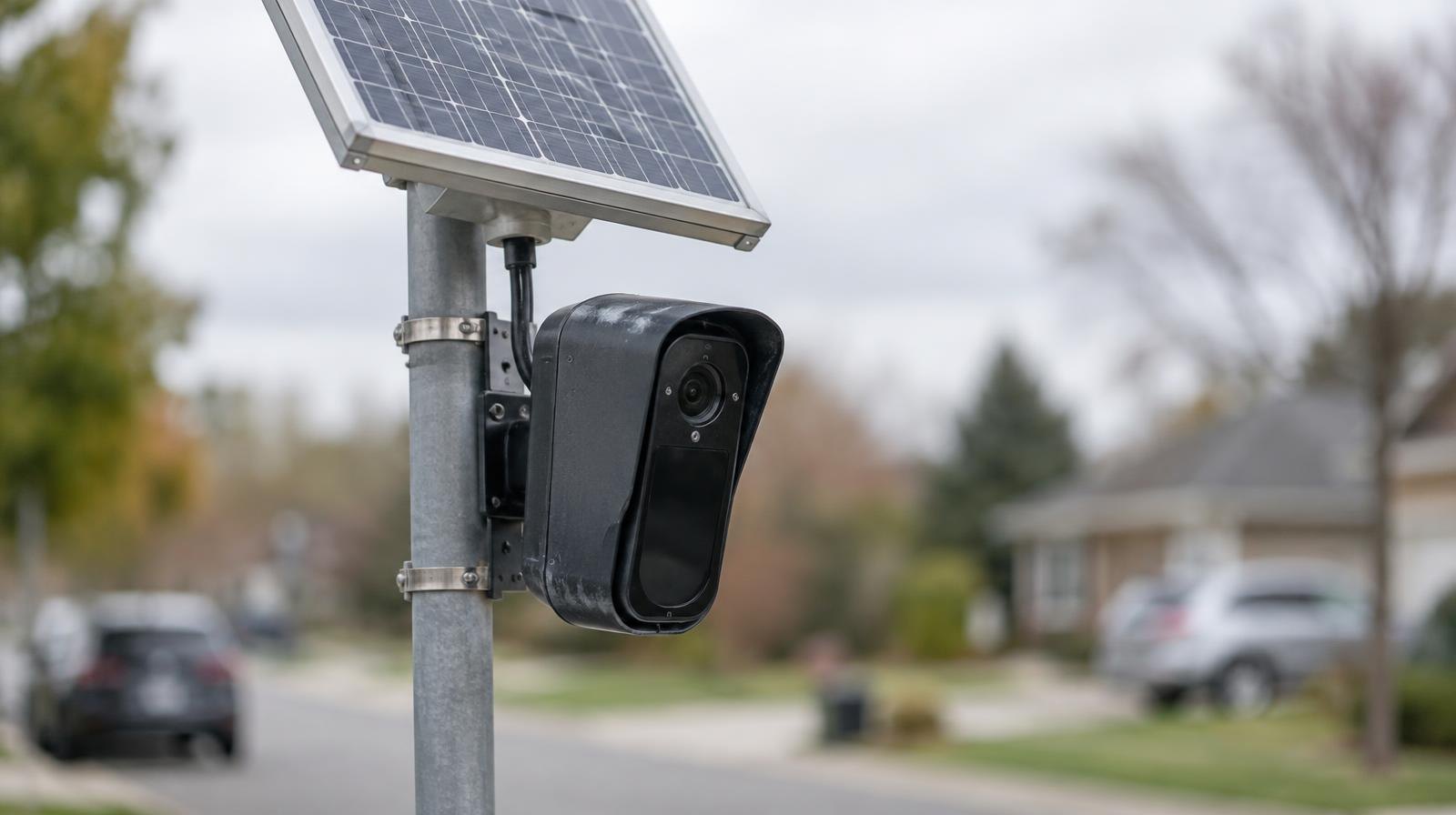
Flock cameras are solar-powered, AI-enabled devices that record license plates, vehicle make and model, and driver characteristics. Contracts allow data sharing among local, state and federal law enforcement across a network spanning 49 states, according to Voices of Monterey Bay.
Carmel, Monterey, Pacific Grove, Seaside, Marina and Salinas all have active Flock cameras in their jurisdictions, according to Finding Flock, an independent online database of known camera locations.
The county vote
Supervisors Wendy Root Askew, Kate Daniels and Glenn Church voted to end the county's arrangement. Supervisors Luis Alejo and Chris Lopez voted to keep the cameras. The Sheriff's Office had been using the 63 cameras for a year at no cost while a long-term contract was negotiated, Monterey County NOW reported.
Undersheriff Keith Boyd warned that losing access would cut the office off from data shared by more than 400 partner agencies. Deputies had queried the Flock system nearly 20,000 times between Aug. 1, 2025, and Sept. 1, 2026, according to Monterey County NOW's coverage of the Sept. 22 meeting. Partner agencies made an estimated 500,000 queries over the same period.
City-by-city fight ahead
Michelle "Mickey" Welsh, a Monterey College of Law professor emeritus, said each city must act independently because each holds its own contract.
"So to eliminate all Flock surveillance, each separate city and agency has to vote on it separately," Welsh wrote in an email to Voices of Monterey Bay.
Carmel's council may face particular pressure. On Monday, Oct. 5, council members rejected a police drone proposal over privacy and public trust concerns, according to the Carmel Pine Cone. Carmel Police Chief Todd Trayer told KSBW on Sept. 23 that his department's cameras should stay. "Our community is safer with LPR systems, and it's my job and responsibility to monitor how it's used here," Trayer said.
District Attorney Jeannine Pacioni has defended the technology. In a statement before the Sept. 22 vote, Pacioni said more than 6,000 criminal cases brought by county prosecutors involved ALPR evidence.
No upcoming agendas for the Monterey, Pacific Grove, Carmel or Seaside city councils list a Flock camera item as of Friday, Oct. 9. Residents can check each city's website for meeting schedules and public comment opportunities.